
Refrigeration systems under attack: why is remote access still a cybersecurity blind spot?
Key takeaways
- Poorly secured remote access can leave industrial equipment open to attacks with physical and financial consequences.
- With manufacturers, integrators, service providers and retailers all involved, poorly defined OT/IT governance allows blind spots to persist.
- Controlling access, identifying who is connecting, logging what they do and being able to cut a connection are all key to sovereignty and operational resilience.
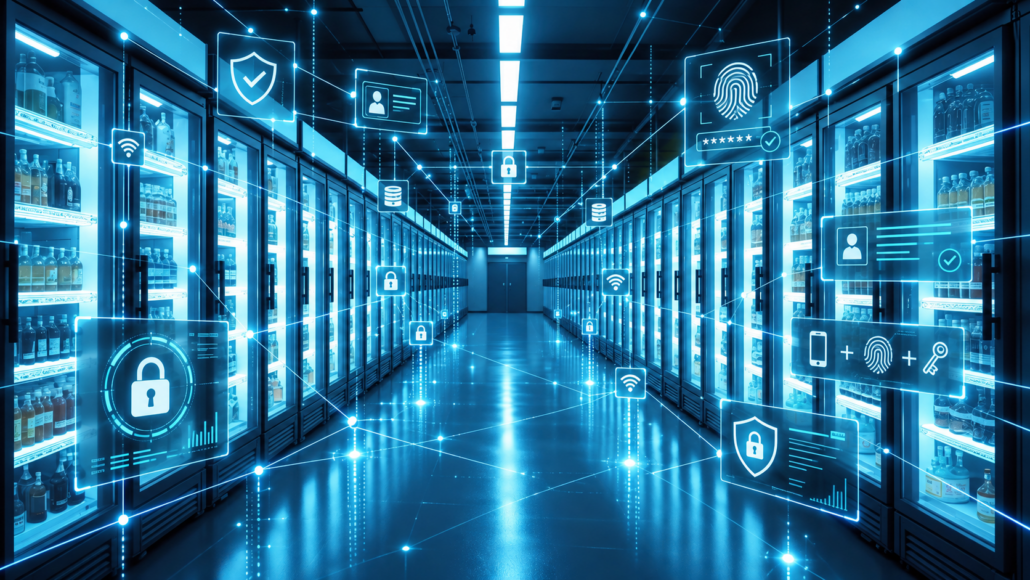
Overnight on 2026, 11–12 October, a cyberattack in France targeted nearly 700 refrigeration units across major retail chains, exposing vulnerabilities in industrial infrastructure that is critical to business continuity. Poorly secured remote access and responsibility spread thinly across manufacturers, service providers and operators: the incident highlights the blind spots in operational technology (OT) security. Yoann Delomier breaks down the weaknesses that were exploited and explains why controlling access is key to resilience and digital sovereignty.
How do these refrigeration units end up being remotely accessible, and when does that access become a vulnerability?
These units are connected devices, with remote access and data exchanged between the equipment and a monitoring system. This meets genuine operational needs: maintenance, temperature and lighting adjustments, energy optimisation and so on.
Remote access: when maintenance opens the door
It is the refrigeration engineers and integrators who install this equipment and set up remote access (often through nothing more than a VPN, though some units are left fully exposed to the internet), without realising just how vulnerable these devices are to cyber threats.
Beyond poorly protected remote access or direct internet exposure, other factors make these connected units even more vulnerable, as the recent wave of attacks showed. First, security is not built into the design of the equipment from the outset.
These units often stay in service for 10 to 15 years and receive very few updates. Vulnerabilities remain open long after they are discovered, and some are never patched at all, because patching can be technically difficult: fridges and freezers cannot be shut down without breaking the cold chain, which risks spoiling their contents.
Several weaknesses came to light during the recent attacks: vulnerabilities that had been disclosed only a few weeks earlier, a dynamic administrator password intended solely for the manufacturer that had nonetheless been circulating, and a lack of oversight by the retail chains of the equipment in their stores, whether franchised or company-owned.
In fact, it was only after the attack that senior management at these retailers discovered this industrial equipment existed at all, and that it could serve as an entry point for attacks that might damage their reputation.
“This wave of attacks shows that access becomes a vulnerability when you control neither who connects, nor what they do, nor whether you can cut the connection.”
What do we know about how the attacks were carried out? How were they able to reach several countries?
This was a large-scale, coordinated wave of attacks. Nearly 700 units were hit in a single night in France, following a precise method.
A familiar attack pattern
The attackers used the administrator password that had been circulating, together with the recently disclosed vulnerabilities, to compromise remote access to the refrigeration equipment.
The attacks required little in the way of sophistication. By taking control of temperature controllers that had been left reachable from the internet, the attackers were able to change the settings of supermarket fridges and freezers remotely.
Some stores had to throw away stock that was no longer fit for consumption, causing significant financial losses for the retailers.
The same method was used again three weeks later in other countries. Because the same manufacturers supply retailers in both Europe and the United States, a single vulnerability opened the door to an international fleet of equipment.
The geopolitical context behind the cyberattacks
On 9 November 2026, France attributed the series of attacks carried out overnight on 11–12 October to Iran, and more specifically to the Shahid Kaveh unit, which is part of the Islamic Revolutionary Guard Corps. Yet the attacks had previously been claimed by two cybercriminal groups believed to be of Russian origin, Z-Pentest and NoName057(16). Was this an opportunistic claim by the cybercriminal groups, or a sign of close collaboration between Iranian and Russian actors?
As for motive, these attacks look more like sabotage than an attempt at financial gain. The incident is better understood as part of hybrid warfare, given the highly tense geopolitical climate of late and a broader drive to destabilise on an international scale. This is a threat worth watching: attackers could just as easily target warehouses, where a loss of refrigeration across large volumes of fresh produce would hit retailers far harder.
When a refrigeration engineer installs and maintains this equipment remotely, who is responsible for day-to-day access security? Where are the blind spots in how responsibility is shared between the service provider, the operator and the cybersecurity teams?
If nobody saw the threat coming, it is because responsibility for securing this equipment is poorly defined. In practice, it is shared between several parties. The manufacturer is responsible for the security of the administrator password, the vulnerabilities in the units and the infrequency of updates.
The refrigeration engineer or integrator also bears some of the responsibility, since they are the ones who set up the remote connection, often with no contractual obligation to go through a secure system.
Equipment cybersecurity: the case for joined-up governance
On top of this comes the responsibility of the retailer, which varies depending on its operating model. For the company-owned stores that were hit, responsibility clearly lies with the group.
For franchised stores, things are far less clear-cut. Store managers may have free rein when it comes to maintenance contracts.
The central IT teams at these retailers handle cybersecurity for both the group and its franchisees, but they very often underestimate the risks posed by having connected industrial equipment in every store.
Governance at the major retail chains needs to evolve on this issue by bringing in industrial cybersecurity specialists, so that incidents like this one are not repeated.
“Manufacturer, service provider, retailer, franchisee: when responsibility is spread this thin, nothing is actually protected.”
In practical terms, how does digital sovereignty change things for a retailer? What resources does it need to regain control over its service providers’ access and keep the cold chain intact in the event of an attack?
As I see it, it is about reducing dependence on any single country, product or manufacturer. French retailers tend to rely on foreign manufacturers for critical equipment that has vulnerabilities and is difficult to update.
Digital sovereignty: taking back control of access
That said, switching manufacturers or updating the entire fleet is easier said than done. The priority is not so much to fully secure the refrigeration controller itself as to regain control over the people who work on that equipment day to day.
Every retailer should be able to verify who is connecting, log the activity of all users (service providers included), and immediately cut or block a connection if something goes wrong, thereby reducing the exposure of each piece of equipment.
This level of control lowers cyber risk without getting in the way of maintenance or day-to-day operations. Above all, it requires service providers to go through secure access for any work on connected industrial equipment.
In response to the attacks, some retailers, unable to restrict access in a targeted way, had no choice but to disconnect their stores from the internet entirely. The operational impact is now forcing them to react in a hurry.
With granular access control, the attackers’ access could have been cut off without compromising the store’s security.
About the author:

Yoann Delomier is Business Strategy Leader OT at WALLIX, a European cybersecurity software vendor specialising in privileged access management (PAM) and secure remote access.
With 15 years of experience in cybersecurity, most of it at the VINCI Group, he joined WALLIX in 2021 to build up its industrial business. He now leads the company’s OT strategy, from technology partnerships to go-to-market.
He champions cybersecurity that is designed for the factory floor, sovereign and pragmatic: staying in control of critical systems without ever slowing down production.
Related resources
-
 IDENTITY AND ACCESS GOVERNANCE PRIVILEGE ACCESS MANAGEMENT REPORTS WHITEPAPER
-
 FINANCE & INSURANCE SUCCESS STORIES


